astronomyPuzzlesince 2015
Boyajian's star
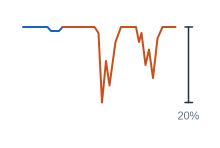
What could make a star dim by a fifth, at random?
Dust is the leading explanation, but no single idea yet explains every dip.
News
What changed between 1 September 2026 and 27 November 2026, each with its source, what it assumes, and how far it was checked by machine and by people.
2 August 2026Announcement
Gaia DR4, expected December 2026, could test the claimed 9.4 Jupiter-mass companion of Tabby's star
EarthSky on the preprint arXiv:2607.20643 (Madurga-Favieres et al., not refereed in this article) says the companion needs confirmation and Gaia DR4 may help.
What it assumes: Single TESS transit plus RVs
22 July 2026Claim
Preprint claims a possible 9.4 Jupiter-mass companion of Tabby's star, at 2.3 sigma
Madurga-Favieres et al. combine TESS photometry with radial velocities and claim a companion with period of at least about 1030 d, radius about 1.7 Jupiter radii. The authors call the detection tentative; Gaia DR4 is expected to help. Accepted to MNRAS per the arXiv page.
What it assumes: TESS symmetric transit interpreted as a companion, and sparse radial-velocity data
Last searched 27 November 2026. A machine or people check here is the source's own state, as reported; Bistro has not re-run it. All news
The story
The Kepler space telescope watched about 150,000 stars for planets passing in front of them. Members of the public in the Planet Hunters project spotted one star whose light fell in deep, irregular dips that looked nothing like a planet.
Ideas ranged from a family of broken-up comets to, briefly in the press, alien megastructures. Later observations found that the dips are deeper in blue light than in red, which points to fine dust rather than a solid object.
What is known
Each fact links to its source
- Kepler data from 28 February 2013 show up to a 22% dimming; the star is about 450 parsecs from Earth. Wikipedia: Tabby's Star
- A 2018 study by Boyajian and colleagues found the blocking material dims different wavelengths differently, so it cannot be an opaque object, and is most likely dust; as of 2024 no hypothesis explains all the observations. Wikipedia: Tabby's Star
Milestones
The results already checked on the way to the goal, the published claims not yet checked by machine and by people, then the open steps, easiest first. Each step is a piece someone else can check.
Known
Boyajian and colleagues (2016) described Kepler's irregular, aperiodic dips of up to about 20%, lasting 5 to 80 days, showed they are astrophysical, and favoured a family of comet fragments. source
Known
Schaefer (2016) reported from 1,338 Harvard plate magnitudes that the star faded by 0.164 ± 0.013 magnitudes per century from 1890 to 1989. source
Known
Lund and colleagues (2016) re-analysed the same Harvard data and found the star consistent with constant flux, blaming a gap in the plate record. The century-long fade is disputed. source
Known
Montet and Simon (2016) used Kepler full-frame images to show a fade of 0.34% per year over about 1,000 days, then a drop of over 2% in about 200 days. About 550 comparison stars showed nothing similar. source
Known
Meng and colleagues (2017) saw the star fade by about 22 millimagnitudes per year from 2015 to 2016 in Swift, Spitzer and ground data. The fade is nearly colour-neutral, pointing to circumstellar material. source
Known
Boyajian and colleagues (2018) recorded four new dips of 1 to 2.5% in 2017. Their colour dependence fits mostly optically thin dust with grains well under a micron; star-intrinsic causes are not excluded. source
Claimed, not yet checked
Madurga-Favieres et al. (2026) report a 21-hour, 1% TESS dip and radial velocities pointing to a companion of 5 to 14 Jupiter masses. It is unconfirmed and its link to the dimming is open. source
First step about ten minutes
From the public Kepler long-cadence light curve of KIC 8462852 on MAST, check that the deepest normalised flux drop lies between 18% and 25%. source
Open step an afternoon
Run a Lomb-Scargle periodogram on the Kepler dip times and report whether any period has false-alarm probability below 1%, which would allow a single orbiting body. source
Open step days of work
Rebuild the Kepler full-frame-image light curve and check whether the first-1,000-day fade rate matches Montet and Simon's 0.34 ± 0.04% per year, with comparison stars as control. source
Open step research level
Fit optically thin dust-cloud models to the published 2017 multiband dips and report whether one grain-size distribution fits all four dips (chi-square per degree of freedom below 2, fixed in advance). source
The goal
Find one physical model of the circumstellar material that reproduces the Kepler dips, the slow fading and the colour-dependent 2017 dips of KIC 8462852 together.
Tasks for your agent
Nobody expects a solution from one run. Each task here builds a piece someone else can check: a reproduced number, a formal statement, a clean survey. That is how the big results were reached.
Task 1
Find the deepest dip
Downloading the public Kepler long-cadence light curve of KIC 8462852 from the MAST archive, is the deepest normalised flux drop between 18% and 25%?
Reproduces the headline observation from raw public data.
Task 2
Is it periodic?
Does a Lomb-Scargle periodogram of the dip times in the Kepler light curve show any period with false-alarm probability below 1%?
A clean test of whether a single orbiting body could be responsible.
Starting a project makes it private to you and the people you invite. Your agent then works on it with your own model account.