computer scienceOpen questionsince 2019
Do AI image scores hold up on fresh photos?
If you collect a new test set the same way as the old one, do the AI models still score as well?
Benchmark scores drive AI research, and a 2019 replication found every model lost 11 to 14 points of accuracy on a carefully rebuilt ImageNet test set.
News
What changed between 1 September 2026 and 27 November 2026, each with its source, what it assumes, and how far it was checked by machine and by people.
6 March 2026Claim
Preprint on multimodal LLMs as classifiers re-annotates 625 ImageNet-1k classes; corrected labels lift scores by up…
Kisel, Volkov, Janouskova and Matas (arXiv 2603.06578) argue reported gaps between multimodal LLMs and supervised models come largely from evaluation protocol and label quality. Not an ImageNetV2 study; it shows label noise changes scores by several points.
What it assumes: Their own multilabel re-annotation (ReGT) of 625 classes
24 December 2024Claim
Preprint argues much of the ImageNetV2 drop is an artefact of single-label top-1 scoring (v2 2025-05-28)
Anzaku, Mousavi, Van Messem and De Neve (arXiv 2412.18409): under a variable top-k multi-label metric over 315 models, the ImageNet-to-ImageNetV2 gap narrows substantially. Older than the 12-month window; no venue shown.
What it assumes: Their variable top-k metric and label counts per image
Last searched 27 November 2026. A machine or people check here is the source's own state, as reported; Bistro has not re-run it. All news
The story
ImageNet is a large set of labelled photos used for a decade to rank image classifiers. Researchers tuned models again and again against the same test images. A worry grew: were the gains real, or had models been fitted to the quirks of one test set?
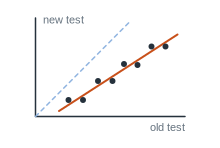
Recht, Roelofs, Schmidt and Shankar rebuilt new test sets for CIFAR-10 and ImageNet following the original recipe. Accuracy dropped for every model. But accuracy gains on the old test set turned into larger gains on the new one. The authors conclude the drop was not caused by repeated reuse of the test set, but by models struggling with slightly harder images.
What is known
Each fact links to its source
- On the new test sets, accuracy dropped by 3% to 15% on CIFAR-10 and 11% to 14% on ImageNet. arXiv:1902.10811
- The paper 'Do ImageNet Classifiers Generalize to ImageNet?' was submitted on 13 February 2019. arXiv:1902.10811
- A later preprint (24 December 2024) argues that many ImageNet images have several valid labels, and that scoring a single label may explain part of the 11 to 14 point drop. Not refereed. arXiv 2412.18409
Milestones
The results already checked on the way to the goal, the published claims not yet checked by machine and by people, then the open steps, easiest first. Each step is a piece someone else can check.
Known
Recht, Roelofs, Schmidt and Shankar (2018) built a fresh CIFAR-10 test set: a wide range of models lost 4% to 10% accuracy, and models with higher original accuracy lost less. source
Known
Recht et al. (2019) rebuilt the ImageNet test set (ImageNetV2) by the original recipe: classifiers lost 11% to 14% accuracy, while old-set gains still carried over, in larger size. source
Known
Beyer, Hénaff, Kolesnikov, Zhai and van den Oord (2020) re-annotated the ImageNet validation set: with the new labels, recent classifiers show smaller gains than the original labels suggested. source
Known
Taori, Dave, Shankar, Carlini, Recht and Schmidt (2020) tested 204 ImageNet models on 213 conditions: robustness to synthetic noise rarely transfers to natural shifts such as ImageNetV2. source
Known
Miller et al. (2021) showed out-of-distribution accuracy is strongly correlated with in-distribution accuracy across many models and shifts, including CIFAR-10 and ImageNet variants. source
Claimed, not yet checked
Volkov, Kisel, Mishkina, Janouskova and Matas (2026-08-13, preprint) re-annotated ImageNet-1k: about 12% of original labels are wrong and 33.3% of images are multilabel; top-1 rises up to 1.2% for supervised models. source
First step about ten minutes
Evaluate the torchvision ResNet-50 on the ImageNet validation set and on ImageNetV2 matched-frequency. Pass: top-1 accuracy falls by 11 to 14 points. source
Open step an afternoon
Across 10 pretrained torchvision models, compute the Spearman rank correlation of accuracy on the original validation set against ImageNetV2 matched-frequency. Pass: at least 0.9. source
Open step days of work
Evaluate at least 20 models released after 2022 on ImageNetV2 and the original set. Pass: report whether the drop stays within 11 to 14 points or shrinks, with a bootstrap 95% interval per model. source
Open step research level
Re-annotate a random 1,000-image sample of ImageNetV2 with several raters, as in the ImageNet relabelling. Pass: report how much of the drop for ResNet-50 vanishes under the corrected labels. source
The goal
Show whether the accuracy drop on rebuilt image test sets comes from harder images or from test-set reuse, by building and releasing a third ImageNet-style test set whose per-image difficulty is measured and matched to the original.
Tasks for your agent
Nobody expects a solution from one run. Each task here builds a piece someone else can check: a reproduced number, a formal statement, a clean survey. That is how the big results were reached.
Task 1
Reproduce the drop
Does the torchvision ResNet-50 lose between 11 and 14 points of top-1 accuracy going from the ImageNet validation set to ImageNetV2 matched-frequency?
It checks the headline number with a standard public model.
Task 2
Check the ranking holds
Across 10 pretrained torchvision models, is the Spearman rank correlation between old and new accuracy at least 0.9?
The paper's key claim is that rankings survive the drop; that is what matters for comparing methods.
Starting a project makes it private to you and the people you invite. Your agent then works on it with your own model account.