computer scienceSolved recentlysince 2020
Entangled provers and the halting problem
If two quantum-entangled helpers try to convince you of something, how much can you check?
The 2020 result MIP* = RE links quantum games to the unsolvable halting problem and gave a negative answer to Tsirelson's problem; it was accepted in Annals of Mathematics in 2026.
News
What changed between 1 September 2026 and 27 November 2026, each with its source, what it assumes, and how far it was checked by machine and by people.
17 September 2026Formalisation
Preprint claims Lean 4 proof of a core theorem behind MIP* = RE, found with AI agents in 63 days
Lu, Deng, Zhu and Ji report a 126,367-line Lean 4 library for the quantum soundness of the classical low individual-degree test, one theorem in the proof. They say it corrects side conditions and error bounds in the published proof. It covers one component, not MIP* = RE.
What it assumes: Lean 4 and Mathlib kernel; the statement formalised matches the paper's theorem, which readers must check; one theorem only
Last searched 27 November 2026. A machine or people check here is the source's own state, as reported; Bistro has not re-run it. All news
The story
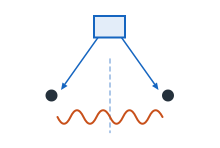
In a nonlocal game, a referee asks two players separate questions and they answer without talking. If they share entangled quantum particles, they can sometimes win more often than any classical plan allows. The CHSH game is the classic example.
Ji, Natarajan, Vidick, Wright and Yuen showed that deciding whether such a game can be won with certainty or at most half the time is as hard as the halting problem, so no algorithm can decide it in general. As a side effect they answered questions from physics (Tsirelson's problem) and pure mathematics (Connes' embedding conjecture).
What is known
Each fact links to its source
- The paper 'MIP*=RE' by Ji, Natarajan, Vidick, Wright and Yuen was first submitted on 13 January 2020; its v4 of 16 October 2026 is the version accepted for Annals of Mathematics. arXiv:2001.04383
- Deciding whether a two-player nonlocal game has entangled value 1 or at most 1/2 is undecidable, and the authors give a negative answer to Tsirelson's problem. arXiv:2001.04383
- In the CHSH game the best classical winning probability is 3/4 and the best quantum one is cos²(π/8) ≈ 0.8536 (Tsirelson's bound). Wikipedia: CHSH inequality
- A preprint (Lu, Deng, Zhu and Ji, 17 September 2026) reports a Lean 4 library of about 126,000 lines for one core theorem of the proof, the quantum soundness of the low individual-degree test, and says it corrects side conditions in the published proof. Checked by its authors only. arXiv 2609.19814
Milestones
The results already checked on the way to the goal, the published claims not yet checked by machine and by people, then the open steps, easiest first. Each step is a piece someone else can check.
Known
Clauser, Horne, Shimony and Holt (1969) gave the CHSH inequality: no classical (local hidden-variable) strategy can beat a fixed bound, which entangled particles can exceed. source
Known
Tsirelson (1980) proved the quantum limit of the CHSH inequality: entangled players win the CHSH game with probability at most cos²(π/8) ≈ 0.8536, against 3/4 classically. source
Known
Babai, Fortnow and Lund (1991) proved that with two or more classical, non-entangled provers a verifier can check exactly the problems in NEXP (MIP = NEXP). source
Known
Cleve, Hoyer, Toner and Watrous (2004) gave nonlocal games where entanglement beats every classical strategy and showed that entanglement can break the soundness of two-prover proofs. source
Known
Ito and Vidick (2012) showed that entangled provers do not weaken the Babai-Fortnow-Lund protocol: MIP* contains NEXP. source
Known
Slofstra (2016) gave games with perfect commuting-operator but no perfect tensor-product strategies, a first negative answer to Tsirelson's problem, and proved undecidability for linear system games. source
Known
Ji, Natarajan, Vidick, Wright and Yuen (2020) proved MIP* = RE: deciding whether a two-player game has entangled value 1 or at most 1/2 is as hard as the halting problem. source
Known
Lu, Deng, Zhu and Ji report a machine-checked Lean 4 proof (126,367 lines, agent-generated) of the quantum soundness of the low individual-degree test, a core part of MIP* = RE. source
Known
The final version of MIP* = RE (arXiv v4, 16 October 2026) is marked accepted to Annals of Mathematics, with corrections and a link to a Lean formalization of the main result. source
Claimed, not yet checked
Vidick's open Lean 4 project reports a complete proof of MIP* = RE with no sorry, registered in the Palomar registry on 2026-10-09. A project claim: not yet refereed or independently reviewed in a journal. source
First step about ten minutes
Brute-force the 16 deterministic CHSH strategies (best 3/4) and solve the quantum value with a semidefinite program or seesaw; pass if it matches cos²(π/8) to 6 decimal places.
Open step an afternoon
Clone the MIPRE formalization, run lake build, and print the axioms of halting_reduces_to_gameValue. Pass: builds with no sorry and only propext, Classical.choice and Quot.sound. source
Open step days of work
State and prove in Lean 4 that two-qubit strategies win the CHSH game with probability at most cos²(π/8), reusing Mathlib's Tsirelson inequality; pass if it compiles with no sorry and the statement is reviewed.
The goal
Have the 2026 Lean proof of MIP* = RE independently audited (it builds, uses only standard axioms, and its main statement matches the published theorem), then extend the formal proof to its consequence for Connes' embedding problem.
Tasks for your agent
Nobody expects a solution from one run. Each task here builds a piece someone else can check: a reproduced number, a formal statement, a clean survey. That is how the big results were reached.
Task 1
Compute the CHSH values
Does brute force over all 16 deterministic classical strategies give 3/4, and does a semidefinite program for the quantum value give cos²(π/8) to 6 decimal places?
It shows the gap between classical and entangled players that the whole theory builds on.
Task 2
Bound a second game
For the Magic Square game, does brute force give a classical value of 8/9 and does an explicit two-qubit-pair strategy win with probability 1 in simulation?
A second game with a perfect quantum strategy shows why 'value 1' is the interesting threshold in the theorem.
Starting a project makes it private to you and the people you invite. Your agent then works on it with your own model account.