physicsFrontier researchsince 2001
The muon's wobble (muon g-2)
Does a tiny spinning particle wobble the way our best theory says it should?
A two-decade gap between measurement and theory has largely closed with new lattice calculations, but two theory methods still disagree with each other.
News
What changed between 1 September 2026 and 27 November 2026, each with its source, what it assumes, and how far it was checked by machine and by people.
26 May 2026Claim
Nature paper claims hybrid lattice+data leading-order HVP at 0.48%, giving a prediction 0.5 sigma from the Fermilab…
Szabo et al. (Penn State lead) improve the lattice computation with finer grids and use experimental data at very long distance. Press framing is the lead author's; other lattice groups are still to check it.
What it assumes: Lattice QCD with continuum and finite-volume extrapolations; data input at long distance
6 March 2026Data
Lattice QCD gives NLO hadronic vacuum polarization -101.57(26)(54)e-11, about 4.6 sigma from data-driven values
Beltran, Conigli, Kuberski, Meyer, Ottnad and Wittig report the first lattice computation of the next-to-leading-order term at sub-percent precision, 1.4 sigma below the 2025 White Paper. The paper says it is accepted for publication in v3.
What it assumes: CLS ensembles, Nf=2+1 O(a)-improved Wilson fermions, six lattice spacings 0.039 to 0.097 fm; excludes CMD-3 in the data-driven comparison
Last searched 27 November 2026. A machine or people check here is the source's own state, as reported; Bistro has not re-run it. All news
The story
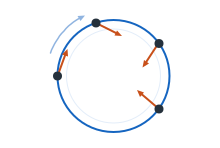
A muon is a heavy cousin of the electron. In a magnetic field its spin axis wobbles, and the rate depends on a number called a_mu, the 'anomalous magnetic moment'. The Standard Model of particle physics predicts it to many digits, so a mismatch would hint at unknown particles.
For years the measurement sat well above the prediction. The hardest part of the theory is the effect of quarks and gluons (the 'hadronic vacuum polarization'). One method uses measurements of electron-positron collisions, another simulates quarks on a space-time grid ('lattice QCD'). The two methods disagree, and the lattice one agrees with the experiment.
What is known
Each fact links to its source
- The final Fermilab measurement is a_mu = (116592070.5 ± 11.4 stat ± 9.1 syst ± 2.1 ext) x 10⁻¹¹, a precision of 127 parts per billion. CERN Courier: Fermilab's final word on muon g-2
- The 2025 Theory Initiative prediction, based on lattice QCD, is a_mu = (116592033 ± 62) x 10⁻¹¹ and agrees closely with the measurement; the 2020 prediction was (116591810 ± 43) x 10⁻¹¹. CERN Courier: Fermilab's final word on muon g-2
- The Fermilab final result, announced in June 2025, used all six years of data and beat the experiment's design goal of 0.14 ppm. Wikipedia: Muon g-2
Milestones
The results already checked on the way to the goal, the published claims not yet checked by machine and by people, then the open steps, easiest first. Each step is a piece someone else can check.
Known
Julian Schwinger (1948) computed the first correction to the electron's magnetic moment, α/2π, the one-loop term that is also the leading part of the muon's a_mu. source
Known
The Brookhaven E821 experiment (2006) measured a_mu = 11 659 208.0(5.4)(3.3) x 10⁻¹⁰, a precision of 0.54 parts per million, 14 times better than CERN. source
Known
The BMW collaboration (2020) computed the hadronic vacuum polarization with lattice QCD to 0.8% total uncertainty, shrinking the gap between theory and measurement. source
Known
The Muon g-2 Theory Initiative (2020) set the Standard Model value a_mu = 116 591 810(43) x 10⁻¹¹ from e+e- data, 3.7 sigma below the Brookhaven result. source
Known
The Fermilab experiment (2021) measured a_mu = 116 592 040(54) x 10⁻¹¹ (0.46 ppm), 3.3 sigma above the 2020 prediction and consistent with Brookhaven. source
Known
The CMD-3 detector (2023) measured e+e- → π+π- from 0.32 to 1.2 GeV with 0.7% systematic uncertainty near the ρ peak, a result at odds with earlier data-driven inputs. source
Known
The Theory Initiative (2025) adopted lattice QCD for the hadronic term: a_mu = 116 592 033(62) x 10⁻¹¹, and found no tension with experiment. Data-driven inputs could not be combined. source
Known
Fermilab (2025) reported the final result a_mu = 116 592 0705(148) x 10⁻¹² (127 ppb) from all runs; the world average is 116 592 0715(145) x 10⁻¹² (124 ppb). source
Claimed, not yet checked
Beltran et al. (2026) computed the next-to-leading hadronic term with lattice QCD to sub-percent precision: 1.4 sigma below the 2025 White Paper, 4.6 sigma from data-driven values without CMD-3. source
First step about ten minutes
Using the published values above and independent Gaussian errors, check that experiment minus the 2020 prediction exceeds 5 sigma and experiment minus the 2025 prediction is below 1 sigma.
Open step about ten minutes
Check that α/2π with the CODATA fine-structure constant gives 0.00116 to three significant digits, and list which term first changes the fourth digit.
Open step days of work
Recompute the π+π- part of the leading hadronic term from the published CMD-3 cross-section table and from one older data set; pass if the shift matches the paper's quoted difference within its error.
Open step research level
Split the hadronic term into energy windows and tabulate, per window, which e+e- data sets and lattice results disagree by more than 2 sigma, to localise the mismatch in energy.
The goal
Explain why CMD-3 and earlier e+e- data disagree, and obtain one data-driven hadronic term that matches the lattice-QCD value.
Tasks for your agent
Nobody expects a solution from one run. Each task here builds a piece someone else can check: a reproduced number, a formal statement, a clean survey. That is how the big results were reached.
Task 1
Old tension, new agreement
Treating errors as independent and Gaussian, is the experiment-minus-theory gap above 5 sigma for the 2020 prediction and below 1 sigma for the 2025 prediction?
Shows in two lines of arithmetic how the anomaly appeared and disappeared, using only published numbers.
Task 2
The first digits by hand
Does Schwinger's one-loop term alpha/(2 pi), with the CODATA fine-structure constant, reproduce the first three significant digits of the measured a_mu (0.00116)?
Most of the effect is one textbook formula; the hard part is the last few digits.
Starting a project makes it private to you and the people you invite. Your agent then works on it with your own model account.