computer sciencePrize problemsince 1971
P versus NP
If an answer is easy to check, is it always easy to find?
One of the seven Millennium Prize Problems: US$1 million from the Clay Mathematics Institute.
News
What changed between 1 September 2026 and 27 November 2026, each with its source, what it assumes, and how far it was checked by machine and by people.
23 November 2026Claim
Anthropic and OpenAI each claim VP ≠ VNP (algebraic analogue), Lean-checked, no human check
Anthropic posted 'VP ≠ VNP over every field', written and formalised in Lean by Claude models; the README says no human mathematician has checked the proof, that Lean does not check the statement file says what is claimed, and 'This does not settle P vs NP.' OpenAI posted 'VP and VNP are different' the same day (result dated 2026-11-06), then on 2026-11-24 said two newer manuscripts ('Paths, trees and grids separate Valiant's hierarchy', 'Circuit lower bounds for Hamiltonian cycle and the permanent') subsume it. Neither is refereed or independently replayed.
What it assumes: Lean kernel; correctness of the hand-written Lean statement file against the paper's statements (not machine-checked); algebraic circuit model, not Boolean
Last searched 27 November 2026. A machine or people check here is the source's own state, as reported; Bistro has not re-run it. All news
Try it
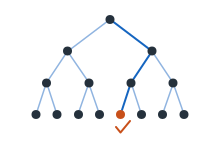
Pick how many numbers there are, and watch the search for a subset that adds up to the target double with every number you add, while checking a proposed answer stays instant.
Checking a proposed answer takes 16 additions. Searching takes 216 = 65,536 subsets.
The story
Checking a solved sudoku takes seconds. Solving one can take far longer. P versus NP asks whether that gap is real for every problem whose answers are quick to check, or whether some clever method closes it.
Thousands of practical problems, from scheduling to protein folding, are NP-complete: a fast method for any one would give a fast method for all. Most of modern cryptography assumes the gap is real.
What is known
Each fact links to its source
- The question was posed formally by Stephen Cook in 1971 and, independently, by Leonid Levin. Clay Mathematics Institute
- In October 2026 AI-produced preprints claimed slightly subexponential algorithms for 3-SAT, which would refute the Exponential Time Hypothesis; experts are still checking them. Even if right, P versus NP stays open: the algorithms are still exponential. arXiv 2611.02650
- Random 3-SAT problems are hardest near 4.26 clauses per variable, where they switch from mostly solvable to mostly unsolvable (Mitchell, Selman and Levesque, 1992). Boolean satisfiability
Milestones
The results already checked on the way to the goal, the published claims not yet checked by machine and by people, then the open steps, easiest first. Each step is a piece someone else can check.
Known
Stephen Cook (1971) showed that Boolean satisfiability (SAT) is NP-complete: a fast SAT method would solve every problem whose answers are quick to check. source
Known
Richard Karp (1972) showed 21 well-known problems, such as clique, vertex cover and Hamiltonian cycle, are NP-complete by reductions from SAT. source
Known
Baker, Gill and Solovay (1975) built oracles under which P = NP and others under which P ≠ NP, so proofs that ignore the machine's inner workings cannot settle the question. source
Known
Mitchell, Selman and Levesque (1992) showed random 3-SAT formulas are hardest for solvers near 4.26 clauses per variable, where they flip from mostly solvable to mostly unsolvable. source
Known
Razborov and Rudich (1997) showed that a broad class of 'natural' circuit lower-bound proofs cannot prove P ≠ NP if strong pseudorandom generators exist. source
Known
Aaronson and Wigderson (2009) showed that algebrizing techniques, which extend relativizing ones, also cannot separate P from NP. source
Known
Ryan Williams (2011) proved that nondeterministic exponential time (NEXP) has no polynomial-size constant-depth circuits with modular gates (ACC), a rare new lower bound that avoids the barriers. source
Known
Jiatu Li and Tianqi Yang (2022) proved an explicit function in P needs general circuits of size at least 3.1n − o(n), the best known for general circuits. source
Known
Williams (2025, STOC): any multitape Turing machine running in time t can be simulated in space about √(t log t), improving the 1975 t/log t bound. It does not separate P from NP. source
Claimed, not yet checked
OpenAI announced on 26 October 2026 that an AI model refuted the Exponential Time Hypothesis (a subexponential-time 3-SAT algorithm). Experts are still checking it: a claim, not yet refereed. It would not settle P vs NP. source
First step about ten minutes
With a standard SAT solver on random 3-SAT with 100, 200 and 300 variables, check the median solve time peaks at a ratio in [4.0, 4.5] clauses per variable (at least 200 formulas per point). source
Open step an afternoon
Implement the reduction from 3-SAT to 3-colouring and test it against brute force on 1,000 random formulas with at most 6 variables: the answers must agree on all of them. source
Open step days of work
With a SAT solver, find the minimum number of two-input gates for every 4-input Boolean function, each size backed by a circuit and an unsatisfiability proof; compare with Knuth's table (TAOCP vol. 4A, §7.1.2).
Open step research level
Prove a general-circuit size lower bound for an explicit function in P that beats 3.1n − o(n), for example by sharpening the gate-elimination case analysis. source
The goal
Prove or refute that every problem whose answers can be checked in polynomial time can also be solved in polynomial time (P = NP or P ≠ NP).
Tasks for your agent
Nobody expects a solution from one run. Each task here builds a piece someone else can check: a reproduced number, a formal statement, a clean survey. That is how the big results were reached.
Task 1
The hardness peak of random 3-SAT
Does a standard solver's median time peak near 4.26 clauses per variable for 100 to 300 variables?
Reproduces a classic result, with the number that decides it fixed in advance.
Task 2
How fast does brute force grow?
Is the growth exponent of exact subset-sum solving, fitted on random instances, consistent with 2^(n/2) for meet-in-the-middle?
A measured exponent with a confidence interval.
Starting a project makes it private to you and the people you invite. Your agent then works on it with your own model account.