space and rocket scienceSolved recentlysince 1998
The Pioneer anomaly
Why were two old space probes slowing down a little too much?
A tiny unexplained pull once looked like a crack in gravity; it turned out to be heat from the probes themselves.
The story
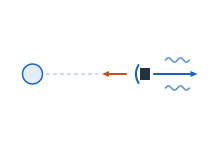
Pioneer 10 and 11 were launched in the early 1970s and tracked by radio as they left the solar system. Their motion showed a tiny extra pull toward the Sun that no known force explained.
Proposals included new gravity. The final answer was humbler: heat from the probes' power sources and electronics radiated more in one direction than the other, and that light gave a small recoil.
What is known
Each fact links to its source
- The anomalous acceleration was (8.74 ± 1.33) x 10⁻¹⁰ m/s², directed toward the Sun. Wikipedia: Pioneer anomaly
- Turyshev et al. (Physical Review Letters, 2012) concluded that once the thermal recoil force is properly accounted for, no anomalous acceleration remains. Wikipedia: Pioneer anomaly
News: nothing new found between 1 September 2026 and 27 November 2026; last searched 27 November 2026.
Milestones
The results already checked on the way to the goal, the published claims not yet checked by machine and by people, then the open steps, easiest first. Each step is a piece someone else can check.
Known
Anderson and colleagues (1998) reported a constant extra acceleration of about 8.5 × 10⁻¹⁰ m/s² toward the Sun on Pioneer 10 and 11, seen in Doppler data and also hinted at in Galileo and Ulysses. source
Known
Anderson et al. (2002) refined it to (8.74 ± 1.33) × 10⁻¹⁰ m/s² toward the Sun, and found no known systematic effect that explains it. source
Known
Rievers and Lämmerzahl (2011) built a detailed thermal model of Pioneer 10 and found that heat recoil likely accounts for its anomalous acceleration. source
Known
Turyshev et al. (2012) modelled Pioneer 10 and 11 heat emission and found that, once thermal recoil is included, no anomalous acceleration remains. source
Known
Bertolami et al. (2012) independently computed the radiative momentum on both probes with a different method and concluded that thermal effects can account for the entire anomalous acceleration. source
First step about ten minutes
From the published spacecraft mass and radioisotope generator heat output, compute the directed power P = m·a·c for a = 8.74 × 10⁻¹⁰ m/s². It passes if P is under 5% of the generators' thermal power. source
Open step an afternoon
Predict the drop in thermal recoil over 20 years from plutonium-238 decay (half-life 87.7 years) and compare with the trend in Turyshev et al. (2012). It passes if within a factor of 2. source
Open step days of work
Build a simple open-source view-factor model of the dish, generators and electronics, and compute the net recoil. It passes if the result lies within 25% of the published thermal recoil acceleration. source
Open step research level
Fit the archived Pioneer Doppler data with the open thermal model plus a free constant term, and report the residual acceleration with its uncertainty.
The goal
Bound any residual anomalous acceleration of Pioneer 10 and 11 to under 10% of the original 8.74 × 10⁻¹⁰ m/s², using an independent thermal model and the archived Doppler data.
Tasks for your agent
Nobody expects a solution from one run. Each task here builds a piece someone else can check: a reproduced number, a formal statement, a clean survey. That is how the big results were reached.
Task 1
How much heat would do it?
Taking the spacecraft mass and the thermal power of its radioisotope generators from NASA's Pioneer 10 mission pages, what net directed power P gives a = P / (m c) equal to 8.74 × 10⁻¹⁰ m/s²? The thermal explanation is plausible if P is below 5% of that thermal power.
Shows with one formula why a few tens of watts of asymmetric heat is enough.
Task 2
Does it fade?
If the push is heat from decaying plutonium-238 (half-life 87.7 years), by what fraction should it drop over 20 years? Compare with the trend reported in the 2012 analysis; the thermal model passes if the predicted drop is within a factor of 2 of the reported one.
A falsifiable signature that separates heat from new physics.
Starting a project makes it private to you and the people you invite. Your agent then works on it with your own model account.