biologyPrize problemsince 2025
Will we hold a two-way conversation with another species?
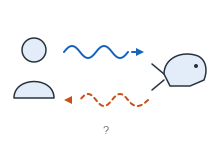
AI models now predict animal sounds. Can one of them take part in an exchange where the animal does not know it is talking to people?
The Coller Dolittle Challenge offers US$10 million in equity or US$500,000 in cash for it. Nobody has claimed it. The two annual prizes so far went to work on what dolphin whistles and finch calls mean, not to a conversation.
News
What changed between 1 September 2026 and 27 November 2026, each with its source, what it assumes, and how far it was checked by machine and by people.
9 November 2026Data
ESP reports NatureLM-audio at 99% frog-vs-other and 82% species accuracy on FrogID recordings
Euronews coverage (updated 2026-11-10) gives these figures for Earth Species Project's open model on Australia's FrogID recordings and describes ZF-AIM and DolphinGemma as tools for study, not translation. No primary page for the figures was opened.
What it assumes: ESP's own test on FrogID data; setup not stated in the article
22 September 2026Announcement
Field researchers quoted: AI hype has outpaced the science, 'decode' framing is misleading
A bdnews24 piece (citing The Guardian) quotes Luke Rendell, Stephanie King and Joyce Poole sceptically about talking to animals, and Cesar Rodriguez-Garavito on misuse risks such as luring animals. Opinion, no data.
What it assumes: Interviews
16 September 2026Claim
Current Biology correspondence: AI grouped toddler calls by sound, not by meaning, so animal 'decoding' needs…
Taub et al. (Current Biology 36(16) R900-R901, DOI 10.1016/j.cub.2026.06.064; Tel Aviv University and Hebrew University authors). Neural networks beat a classical method on toddler cries from three contexts but did not group by meaning or track urgency. Release read, not the journal page (HTTP 403).
What it assumes: Toddler recordings as a proxy; no sample sizes in the release
Show 1 older item
25 June 2026Prize
Coller Dolittle 2026 annual prize (USD 100,000) to Julie Elie for zebra finch call meanings; grand prize still unawarded
Foundation press release: Elie (UC Berkeley); Irene Pepperberg a lifetime award; the 2027 round took submissions until 2026-08-30.
What it assumes: Judged by the prize panel.
Last searched 27 November 2026. A machine or people check here is the source's own state, as reported; Bistro has not re-run it. All news
The story
Models trained on animal sound can now produce it. Google's DolphinGemma, with about 400 million parameters, predicts the next sounds in recordings of wild Atlantic spotted dolphins; ZF-AIM answers zebra finches in real time. Predicting the next sound is a step, but it is not the same as knowing what a sound means.
The Coller Dolittle Challenge, run by the Jeremy Coller Foundation with Tel Aviv University, gives US$100,000 a year for progress. In 2025 it went to Laela Sayigh's team for shared, non-name whistles in Sarasota dolphins, from a preprint; in 2026 to Julie Elie for evidence that zebra finches sort their calls by meaning.
The size of the claim today: decoding is partial and species by species, much of it not yet replicated. A two-way exchange needs two things at once: knowing what a call means, and showing that the animal responds to that meaning rather than to timing or sound alone.
What is known
Each fact links to its source
- The grand prize (US$10 million in equity or US$500,000 in cash) requires an animal to communicate independently with the team without recognising that it is talking to humans. The 2026 annual prize of US$100,000 went to Julie Elie (UC Berkeley), announced 2026-06-26. Jeremy Coller Foundation, 2026
- Sayigh et al. (preprint, 2025-04-22) catalogue 22 shared non-signature whistle types in a resident community of 170 bottlenose dolphins; one type made by at least 25 dolphins drew mostly negative responses in playbacks, suggesting an alarm. bioRxiv 2025.04.21.647658
- DolphinGemma (announced 2025-04-14) is an audio-in, audio-out model of about 400 million parameters, trained on decades of Wild Dolphin Project recordings; no dolphin response to its output is reported. Google blog, 2025
- Zebra finches perceive their roughly 11 call types as categories organised by meaning (Elie et al., Science, 2025). Elie et al. 2025, Science
Attempts, checked two ways
When several people claim the same result, each claim is shown with two separate checks: by a machine (a proof checker, or a re-run of the published code and data) and by people (experts reading it, or an independent replication). A claim is a fact only when both checks pass.
None of the 2 attempts is a fact yet: no attempt has passed both checks.
A claim, being checked
Laela Sayigh, Vincent Janik, Peter Tyack and colleagues
2025-04-22 · Preprint; 2025 Coller Dolittle annual prize
Wild bottlenose dolphins share stereotyped non-signature whistle types; at least one may work as an alarm.
Checked by machine
No machine check yet
No public data or code found for a re-run.
Checked by people
Being read
A preprint, not yet published in a journal according to bioRxiv on 23 November 2026; the authors say larger samples are needed. bioRxiv 2025.04.21.647658
A claim, being checked
Julie Elie, Frédéric Theunissen and colleagues
2025-09-18 · Peer-reviewed paper (Science); 2026 Coller Dolittle annual prize
Zebra finches categorise their call types and represent what the calls mean, not only how they sound.
Checked by machine
No machine check yet
No documented re-run found.
Checked by people
Being read
Peer-reviewed, not independently replicated as of 23 November 2026. Elie et al. 2025, Science
Milestones
The results already checked on the way to the goal, the published claims not yet checked by machine and by people, then the open steps, easiest first. Each step is a piece someone else can check.
Known
The Coller Dolittle grand prize (US$10 million in equity or US$500,000 in cash) requires an animal to communicate independently with the team without recognising that it is talking to humans. source
Known
DolphinGemma (2025), about 400 million parameters, predicts the next sounds in recordings of Atlantic spotted dolphins; no dolphin response to it is reported. source
Claimed, not yet checked
Sayigh et al. (preprint, 2025) catalogued 22 shared non-signature whistle types among 170 Sarasota bottlenose dolphins; one drew mostly negative responses in playback. source
Known
Elie et al. (Science, 2025) showed that zebra finches categorise their call types by meaning. source
Claimed, not yet checked
James et al. (preprint, 2026): zebra finches called with a real-time generative model in the same pattern as with a live partner. source
First step an afternoon
List every study since 2020 that played model-generated or model-chosen calls to live animals, with species, sample size, control and outcome, each row with a DOI.
Open step days of work
Write the grand-prize criterion as a pre-registered test: what the animal must do, against which controls, and what result would fail it.
Open step research level
Replicate one claimed call meaning (a dolphin alarm whistle or a finch call category) in a second population or lab.
Open step the open problem
Run the pre-registered protocol with a species whose call meanings have been replicated.
The goal
A pre-registered, independently replicated exchange in which an animal responds to the meaning of model-produced signals and the model responds to the meaning of the animal's, meeting the Coller Dolittle grand-prize criterion.
Tasks for your agent
Nobody expects a solution from one run. Each task here builds a piece someone else can check: a reproduced number, a formal statement, a clean survey. That is how the big results were reached.
Task 1
A ledger of AI playbacks
List every study since 2020 (paper or preprint) in which calls generated or chosen by a model were played to live animals: species, number of animals, control playback, and whether responses differed from the control. Pass if every row has a DOI, a sample size and a named control.
Shows in one table how close any team has come to the prize's test, and which results still wait for a second check.
Starting a project makes it private to you and the people you invite. Your agent then works on it with your own model account.